Zencap Secures 230 Million EUR from Victory Park Capital

Zencap logoZencap  will receive 230M EUR in investments from Victory Park Capital over a three year period, under an exclusive agreement. Vivtory Park Capital, an asset management firm focused on middle market debt and equity investments, will invest the amount into SME loans originated on the p2p lending marketplace Zencap. The partners are teaming up to provide small and medium-sized enterprises (SMEs) in Germany, Netherlands and Spain with efficient, fast and easy access to capital. Zencap allows SMEs to apply for loans between 5.000 and 250.000 EUR.

Under the terms of the preferred partnership agreement, VPC will be the largest institutional investor on the P2P platform and has secured a credit facility from a leading global bank to leverage Zencap loans at favorable rates. The transaction represents the largest commitment to an online lending platform in Continental Europe and underlines the increasing importance of the sector.

“We are impressed with the Zencap team’s ability to execute an ambitious strategy, and their results in the three countries they operate in give us confidence that this emerging platform is serving a critical market need,” said Gordon Watson, principal at Victory Park Capital. “With this additional lending facility, Zencap will be well positioned to continue to achieve substantial growth over the near term and firmly establish itself as a market leader in Continental Europe.”

Matthias Knecht, co-founder and managing director of Zencap, added, ‘We are excited to announce this long-term, strategic partnership with VPC, the leading investor in the industry. This groundbreaking transaction will help to further accelerate our growth and support us in our mission to provide fast and seamless access to capital for small businesses in Europe.’

Current State of My Bondora Portfolio & Announced Major Upcoming Changes

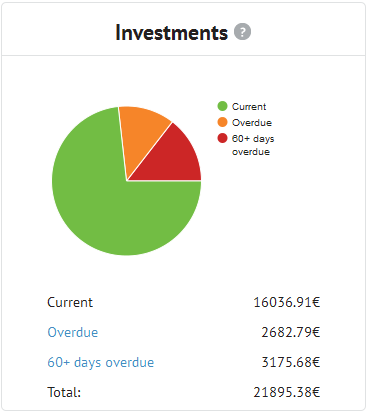
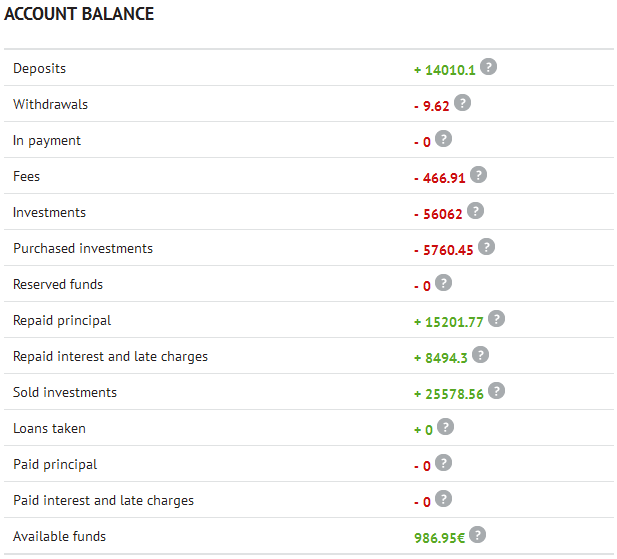
In October 2012 I started p2p lending at Bondora. Since then I periodically wrote on my experiences – you can read my last review published in April here. Since the start I did deposit 14,000 Euro (approx. 15,900 US$). My portfolio is very diversified. Most loan parts I hold are for loan terms between 36 and 60 months. Together the loans add up to 21,895 Euro outstanding principal. Loans in the value of 2,683 Euro are overdue, meaning they (partly) missed one or two repayments. 3,175 Euro principal is stuck in loans that are more than 60 days late. I already received 15,202 Euro in repaid principal back – this figure includes loans Bondora cancelled before payout. I reinvested all repayments.

Bondora Investment 08/2015
Chart 1: Screenshot of loan status

At the moment I have 0 Euro in bids in open market listings and 987 Euro cash available.

Bondora Balance of my Portfolio
Chart 2: Screenshot of account balance

Return on Invest

Currently Isepankur shows my ROI to be 26.76%. In my own calculations, using XIRR in Excel, assuming that 30% of my 60+days overdue and 15% of my overdue loans will not be recovered, my ROI calculations result in 21.8%. Continue reading

The New Saving Stream Pre-funding Model

Saving Stream LogoToday British p2p lending service Saving Stream introduced a new pre-funding option. This is essentially an autobid, which allows investors to bid on every new loan.

Investors have long complained that (smaller) loans were filling within minutes, were not (always) announced in advance and lately the demand caused the server to fail frequently when new loans were announced.

Here is what Saving Stream says about the new pre-funding model:

Rationale

We want to give as many people the chance to invest as possible so we will provide an option to buy in before the loan goes live up to a self-determined limit. We want the smaller investors to be guaranteed a position in every loan, and the deeper pocketed investors will also participate at the same amount as everyone else. If there is spare capacity, the larger investors will pick this up subject to their pre-set investment levels.

This will also help us know how much is potentially available to lend out. This has been a continual problem that we just don’t know the exact appetite for our loan products and thus limits the number of loans that we can make.

How pre-funding will work?

Set your limit to invest in each new loan.
When a new loan becomes available, you will be guaranteed at least a portion of your investment amount if not all, depending on the loan size.
You will be notified of your participation and are expected to follow up with a bank transfer, much in the same way as normal.
You can sell your loan if you want.

Potentially complicated numbers stuff coming up…

For example  – you set your limit to £1k. There are 400 people who have the same limit and 40 with a limit of £10k. A loan of £1m is launched. All 440 people will get £1k (£400k total) and the 40 people with higher limits will get an additional £9k each in the surplus thus they get £10k in total. The remaining availability will go to the market and can be bought by whoever wants it.

It will become complicated when the loan is less than the amount in the Pre-Fund pot i.e £500k loan, 400 people with £1k, and 40 with £10k. Again, all 440 people will get £1k leaving £60k to divide by the 40 which is an additional £1.5k each, giving a total investment of £2.5k for those investors who set their limit higher.

Those investors with higher limits might be disappointed that they didn’t get their full allocation, but they should be happy that they have participated in an equitable distribution model which should assist with the growth and opportunities available. The next loan might be able to take all of their demand plus more.

You won’t be able to review the loan parts or valuation beforehand (yet) but the secondary market is incredibly liquid and we are confident of the ability to sell your position if required.

I expect that Saving Stream customers will widely use this new option. While it seems strange that this option excludes the possibility to review loan details before bidding, this has been essentially happening before already with loans gone in minutes. And the Saving Stream secondary market is very liquid, therefore it is usually not a problem to sell (unwanted) loan parts fast. Continue reading

Interview with Laimonas Noreika, CEO of Finbee

Laimonas Noreika is the CEO of Finbee, a p2p lending service that launched last week and is open to international investors starting today.

What is Finbee about?

FinBee is about borrowing for less and earning more when investing. We also are most user friendly p2p lending platform in Lithuania.

What are the three main advantages for investors?

Firstly, our loans have high interest rate – from 10 to 40 percent. That means, that investor can expect higher return of investment, compared to other p2p lending platforms. Secondly, we have reliable software, that is developed by UK based Madiston. That means, that it is tested and extremely user friendly from day one. And finally, we pay great attention to selection of borrowers, so that the risk for investors is minimized as much as possible. On top of that, we invest 10 percent on total sum into each and every loan, so we share the risk with investors. In the near future we also will introduce compensation fund that in an unlikely case of borrower defaulting on its loan will compensate lenders their investment.

What are the three main advantages for borrowers?

I would say that first and foremost, we offer cheaper loans than most of the players in Lithuanian market, including banks, payday loan companies and credit unions. This is achieved by implementing auction principle when borrowing. That means, that borrower can set interest rate ceiling, for example 15 percent. Lenders then are able to offer lower interest rate, therefore making loan interest rate for the borrower as little as 12 or 13 percent. This is free market at its finest, when the market sets the real interest rate for the benefit of the borrower. Secondly, we are very consumer friendly. We talk, look like and do our business like majority of our clients. We know, what they want and we are doing our best to meet those expectations. Lastly, we have a fair commission policy. That means that if borrower has high credit rating, our commission is lower.

What ROI can investors expect?

Laimonas NoreikaIt‘s all up to investors. Loan interest rate will be between 10 and 40 percent, therefore investors can decide for themselves if they want lower risk and lower potential ROI or higher risk with possibility of higher potential ROI.

How did you start Finbee? Is the company funded with venture capital?

FinBee started little over a year ago, when I quit my position as a CMO in one Lithuanian company and started everything from scratch: examining the market, getting know-how, attracting investors and partners, picking up experienced team members. Big breakthrough moment was when Madiston became our partner and we got a technological edge against our local competitors

Is the technical platform self-developed?

No, software is provided by Madiston, whose Tim Simon is also member of FinBee board. Tim has an extensive experience of delivering successful applications to the Financial Technology marketplace as a founder and CEO of Quotient plc and Mondas plc, listed on the London Stock Exchange and AIM respectively. Continue reading

Seedrs Shares Available in Equity Crowdfunding Campaign on Friday

Seedrs LogoSeedrs, one of the tow biggest equity crowdfunding platforms in the UK (and probably in the world), has announced that it will open a new campaign offering shares to the crowd on Friday. To bid in the pitch and become a shareholder, interested investors need to register at the Seedrs website first and then wait for the campaign to open on Friday.

Jeff Lynn, CEO of Seedrs said:

Last month Seedrs announced its £10 million Series A round led by Woodford Patient Capital Trust and Augmentum Capital. As we explained, we have set aside £2.5 million of that round for existing shareholders and new investors to invest through a campaign on the Seedrs platform. …

The campaign will go live to members of our Leedrs Club (the group of our most active investors) at 9:00 am this Friday, 21st August, and it will then go live to all investment-authorised members at 12:00 pm the same day. … Investments will be accepted on a first-come, first-served basis, and although you will have several days to make payment after investing, we would suggest [investors] transfer any funds [they] wish to invest sooner rather than later.

Please note that by the time the campaign opens on Friday, a significant proportion of the £2.5 million will already have been taken up by existing shareholders exercising their pre-emption rights. We expect, however, that there will still be a good bit of room for new investors, and it is our hope that we will be able to use this opportunity to expand our investor base meaningfully.

I expect that this offer will fill very quickly. The last comparable offer by Crowdcube, Seedrs main competitor, was filled within minutes.

Bondora Investments Using Decision Trees – Review of Progress – Part 6

This is part 5 of a series of guest posts by British Bondora p2p lending investor ‘ParisinGOC’. Please read part 1, part 2,  part 3 and part 4 and part 5 first.

Plan Your Change And Change Your Plan!

As stated in the previous article (see part 1-3) and revealed in the graphs of performance, I started using the Decision Trees in response to the rapid rise in defaults in my portfolio. Except for very small numbers of “opportunistic” purchases, I have maintained a strict discipline on purchase in order to ensure that my progress could be monitored and assessed. As my confidence has grown, I have modified this discipline to take advantage of the Bondora environment to achieve the demanding personal goals I had set myself when I first started. These included only purchasing Loan parts that should accrue 50% interest over the forecast life of the loan – i.e. should turn 5 Euro into 7.5 Euro over the original loan period.

Since early June, I have modified this discipline further and now purchase loans that, whilst still meeting my overarching rule of looking for 5% to 7% historical default levels, do not have a high enough interest rate to meet my earlier profitability goal. I intend to try and sell these loan parts on the Secondary Market with a short-term profit goal, after Purchase/Sale costs.

This further leg of my overall strategy is still in its infancy, but the results from my use of Decision Trees in my initial selection of Loan Applications suggest I am buying the best performing loans available. This means that should other investors not share this view, I will at least be left with Loan Parts that will perform well for me for the time I hold them.

Given the latest changes at Bondora mentioned earlier, if I can only acquire “good” (as defined by the Decision Tree analysis) from the Secondary Market, it may be that this buy-to-sell tactic may not be possible into the future.

Tree development

Tree Analysis

In the previous article (see part 1-3) on the construction of the Decision Trees, I explained how I had made adjustments to the overall analysis process to give more weight to factors such as “Total Income” in the actual Decision Tree analysis. I have kept the included data under constant Review and have added a few further fields to the analysis process, in particular the field showing the “Total Monthly Income/ New Repayment”. As stated in the first article, this needed to be modified from an infinitely variable value into 20 ranges, each of equal numbers of samples.

I mention this particular field as, since January 2015, it appears as an important feature in both the Estonia and Finland Trees and continues to appear more often in these Trees.

Volume and confidence

It is a fact that Estonia has been the largest market for Bondora from its days as Isepankur. In simple volume terms, the data I use (from 1/1/2013) shows that Estonia accounts for c.50% of the total loans, with Finland and Spain making up about 25% each. Slovakia is simply no longer mentioned in polite, Bondora society, so I will pretend it never happened!

Whilst it is true that Estonia has a lower historical default rate, in the dataset that I use, defaults do occur and are presently running at around 11.986% (1009 out of 8418), compared with exactly 18% (576 out of 3200) for Finland and 27.059% (1022 out of 3777) for Spain.

The above figures carry several implications as follows:

The Estonian Tree is fairly static with few changes at the highest levels. Estonian Loans within Bondora bring with them a richness in the data, by which I mean that the original Credit Scores are well represented across the Loan Applications compared to Finland and Spain, which are almost entirely populated with examples with a Credit Score of “1000”. What this means for Estonia is that the Decision Tree neatly shows that the Bondora Credit Score is relatively accurate, with higher numbers of defaults at lower Credit Scores. Thus it is that the historical record shows that Loan Applications with a Credit Score of “1000” (the highest and most sought after) make for good hunting when searching for segments having a default rate of less than 5%. Indeed, it is not uncommon for the Decision Trees to reveal segments of 50+ examples with NO defaults over the last 2.5 years.
Finland and Spain however, with very few historical Loan Applications with a Credit Score of anything other than “1000” combined with a default rate 50% and over 100% higher respectively than Estonia AND volumes less than half that of Estonia, provide pitifully few obvious segments with a sub-5% default rate AND sufficient numbers of examples to support anything like the confidence levels of Estonia.

I believe that the lack of richness in the Finnish and Spanish data is revealed in the overall structure of the different Trees.

Estonia

The top-most branch in the Estonian Tree is based upon the Employment Status of Estonian Applicants. This represents 5 different values: Full Employment (c.90%), Entrepeneur (c.4%), Self-Employed, Retired and, finally, Partially Employed (these last at c.2%).

The Credit Score generally appears at the 2nd, 3rd or 4th level below this and, as stated above, provides a firm “fault line” between >5% and <5% default rates in most of the segmentation below these levels.
As noted earlier, for those in Full Employment initially Income and latterly the ratio of cost to income (which I refer to subsequently as “Affordability”) is the next most significant differentiator followed by Credit Score with the paths exhibiting differing significant data elements somewhat below this level.

A strange (in my eyes) feature of what I call “Affordability” that appears in the Estonian Tree for those in Full Employment is an apparent truth that the more someone can afford to cover the cost of the loan, the less likely they actually do so and the more likely it is that default will occur! 17.333% (65 out of 375) of those in Full Employment who appear to be most able to afford their loans go on to default whereas only 6.54% (24 out of 367) of those in Full Employment showing the lowest affordability have defaulted. So it seems that, in Estonia, the higher the ability to pay, the less likely this is to occur!

Finland

The lack of richness in the Credit Scores provided by Bondora for Finnish (and Spanish) Loan Applicants is revealed, as the Credit Score is the primary determinant at the top level. This is, however an almost totally useless determinant as just over 98% (just under 98% for Spain) of all Finnish Loan Applications carry a Credit Score of “1000”. Below this level, Employment Status is the prime determinant, as in Estonia, but there any resemblance ends as lacking the Credit Score and with lower overall volumes and there is no common thread to the analysis.

Latterly the ratio of cost to income (what I have termed “Affordability”) has crept in at lower levels but there is no pattern to be discerned and the Tree has not settled down to any pattern at the lower levels with changes occurring at all iterations.

Such are the problems with low volumes and high default rates that I have changed the parameters for the Decision Trees for Finland and Spain to force the analysis to work with higher volumes in the nodes and leafs (end points) in an attempt to increase confidence levels. This has the unfortunate side effect of there being few leafs with a sub-5% default rate, the notable exception being a leaf of 23 examples with a 0% default rate.

Spain

As noted above, Spain shares with Finland the feature of Credit Score and Employment Status being the top 2 levels but for Spanish Loan Applicants in Full Employment, the number of Dependants appears to be the most important factor and has remained so for over 6 months of analysis. This data element does appear occasionally in both other trees, but only at much lower levels.

Other than this notable difference, the overriding feature of the Spanish Decision Tree is the lack of leafs showing a sub-5% default rate. Even where sub-5% default rates can be found, there are so few examples in the set with little in the way of trend or discernable pattern to support confidence at any instinctive level.

The best sub-5% default rate is a leaf of 21 examples, being 4.75%, for fully employed, divorced people with 1 dependant living in Pre-Furnished property! All other leafs with a sub-5% default rate are based on less than 10 examples. Many are only single examples.

A competent statistician (which I am not!) may be able to pry some hidden gems from this Tree, but I fear not.

Conclusion

The Decision Trees themselves, whilst changing over time, now appear to have settled down and changes that occur do so at finer levels of granularity with only occasional changes in the overall structure of any particular tree.

The numbers of samples (the complete Bondora dataset) entering the process have now reached the level where the Trees for Finland and Spain required modification of the actual Decision Tree analysis (known as an “ID3” tree) to increase the sample sizes at the lowest level. This has increased my confidence in the output even though the levels of default are so high that identifying sub-5% default levels leave me rejecting many more Loan Applications than I actually invest in.

My initial, restricted purchasing at the start of my new strategy has opened out over the course of period under review. After an initial period where my cash reserves grew to over 25% of my initial investment at Bondora, I am now confidently pursuing new avenues of activity with a view to maximising my returns within the opportunities suggested by the Decision Tree analysis.

This success in using manual selection of investment opportunities comes in the face of constant change at Bondora, change that is trying to move the investment process towards a passive, easy-to-use activity – an understandable business logic.

I take some comfort that my total efforts to date (which include aggressive management of non-performing loans) appear to be returning better than average results. In conclusion, I believe that my change from instinct- to numbers-lead investing has improved my portfolio performance when measured by this admittedly coarse scale of default level. Furthermore, this process has allowed me to start to take a wider view of the opportunities available on the Bondora platform and I hope to be steering my returns back to the levels that initially drew me to this platform.
In terms of the performance over the past 9 months, I experience severely reduced default levels going forward compared to those that triggered my realisation that a new investment strategy had to be formulated. I am now seeing levels similar to those last observed almost 2 years ago, on purchasing volumes approximately double those from that time. I will be the first to admit that the loans purchased over the last 9 months have yet to “mature” to the level of those from nearly 2 years ago, but I have a renewed confidence in the future performance of my portfolio at Bondora.

P2P-Banking.com thanks the author for sharing his experiences and strategy in detail.

Back in March an investor from Luxembourgh wrote an article sharing his experiences in applying machine learning to peer-to-peer lending at Bondora.